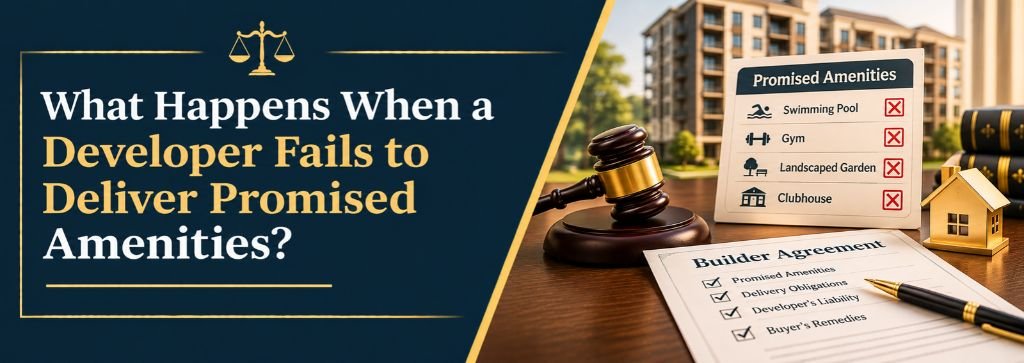
A homebuyer purchasing a flat often considers more than the apartment itself. Facilities such as a clubhouse, swimming pool, gym, landscaped gardens, children’s play areas, lifts, security systems and adequate parking can influence the purchase decision and the price paid. When a developer fails to provide these facilities, the builder failure to provide amenities may amount to a breach of contractual or statutory obligations, depending on the promises made and the project documents.
Indian law provides homebuyers with remedies in appropriate circumstances. The Real Estate (Regulation and Development) Act, 2016 (RERA), the Consumer Protection Act, 2019 and the terms of the agreement for sale may help buyers seek completion of the promised facilities, compensation, refund or other relief. The appropriate remedy depends on whether the amenity was actually promised, whether it formed part of the approved project and what the developer has delivered.
What Counts as a Promised Amenity in a Real Estate Project?
Amenities are facilities and services intended to improve the usability, safety or convenience of a residential or commercial project. They may include recreational facilities such as swimming pools, gyms and clubhouses, as well as essential services such as water supply, electricity, sewage treatment, fire safety, lifts and internal roads.
The distinction between an advertised facility and a legally enforceable commitment is important. A developer may promote a project through brochures, advertisements, websites, sample flats and sales presentations. The agreement for sale, allotment documents, sanctioned plans and project disclosures help establish which facilities were promised and the extent of the developer’s obligations.
Under RERA, the definition of common areas includes facilities such as parks, play areas, common basements, terraces, installations for central services and community or commercial facilities provided in the project. Therefore, a dispute may concern not only a missing recreational feature but also an incomplete common facility or essential service.
What Does RERA Say About a Builder Failing to Provide Promised Amenities?
RERA places specific obligations on developers, legally described as promoters. Section 11 requires promoters to disclose project information, including sanctioned plans, specifications and the stage wise schedule for completion of the project. It also makes promoters responsible for obligations under the Act, applicable rules and regulations, and the agreement for sale.
Section 14 is particularly relevant to disputes involving missing or altered amenities. It requires the promoter to develop and complete the project in accordance with the sanctioned plans, layout plans and specifications approved by the competent authority. It also restricts changes to disclosed plans and specifications, including the nature of fixtures, fittings, amenities and common areas, except in accordance with the statutory requirements.
A developer cannot simply remove or materially alter a promised facility without considering the applicable approval and consent requirements. Whether a particular change is permissible depends on its nature, the sanctioned plans, the agreement and the relevant provisions of RERA. Read the Real Estate (Regulation and Development) Act, 2016 on India Code.
Are Promises Made in a Builder’s Brochure Legally Binding?
A common dispute arises when the developer argues the brochure was only promotional material and the buyer relies on it as evidence of promised facilities. The legal position depends on the representations made, the agreement and the surrounding circumstances. A brochure is not automatically irrelevant merely because the agreement contains more detailed terms.
In Wg. Cdr. Arifur Rahman Khan v. DLF Southern Homes Pvt. Ltd. (2020), the Supreme Court considered complaints involving, among other matters, deficiencies in amenities and failure to construct a clubhouse. The decision is relevant to the assessment of developer obligations and the remedies available to homebuyers when project commitments are not fulfilled. In another matter, Padmini Infrastructure Developers Ltd. v. Royale Garden Residents Welfare Association (2021), the Supreme Court upheld the importance of evidence concerning promised common facilities, including a clubhouse and other amenities. These decisions show why buyers should preserve brochures, advertisements and written representations rather than relying only on oral assurances. Read the Supreme Court judgment in Wg. Cdr. Arifur Rahman Khan.
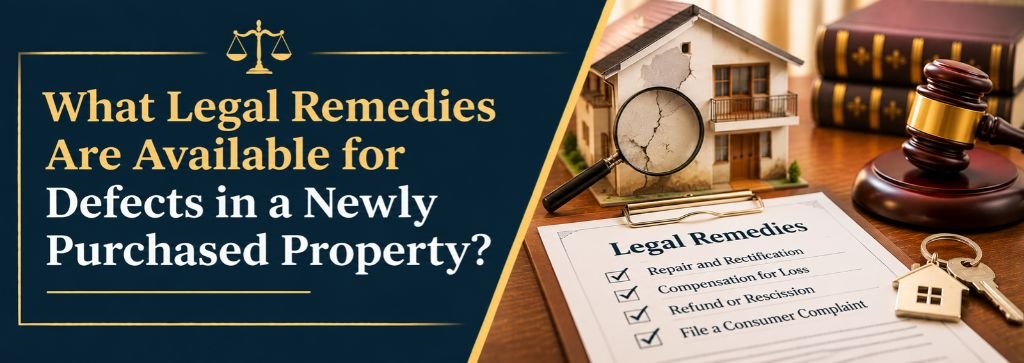
What Legal Remedies Are Available to Homebuyers?
The remedy depends on the nature of the missing facility, the stage of the project and the evidence available. A buyer should first identify the precise commitment and determine whether the developer has failed to meet a contractual or statutory obligation.
1. Filing a Complaint Before the State RERA Authority
A homebuyer may file a complaint before the relevant State RERA Authority under Section 31 where the promoter has contravened the Act, rules, regulations or obligations under the agreement for sale. The complaint may seek directions requiring the developer to complete promised amenities, comply with approved plans or fulfil relevant obligations.
The relief will depend on the facts and the Authority’s powers. A complaint should identify each missing facility, explain where it was promised and provide evidence of the present position. Buyers should also check the relevant State RERA rules and complaint procedure, as filing requirements and prescribed forms may differ.
2. Seeking Compensation for Incomplete or Missing Facilities
Where a developer’s failure causes financial loss or other legally recognised injury, a buyer may seek compensation under the applicable provisions of RERA or consumer law. The nature of the claim matters. A request for directions to complete a facility is not necessarily the same as a claim for monetary compensation.
In Padmini Infrastructure Developers Ltd. v. Royale Garden Residents Welfare Association, the Supreme Court dealt with a dispute involving facilities including a water softening plant, health club, swimming pool, fire fighting system and clubhouse. The Court recognised the significance of the evidence concerning the developer’s commitments and the facilities actually handed over. The case illustrates how compensation may be considered where completion of the promised facilities is no longer a practical remedy.
3. Filing a Consumer Complaint
A homebuyer may also consider a complaint under the Consumer Protection Act, 2019 where the facts disclose deficiency in service or an unfair trade practice. Depending on the circumstances, the consumer commission may grant relief such as removal of the deficiency, compensation or refund.
The Supreme Court has recognised that consumer remedies can remain available to homebuyers alongside remedies under RERA. However, the appropriate forum and relief should be assessed carefully, particularly where proceedings have already been initiated elsewhere. Buyers should avoid assuming every missing amenity automatically establishes a consumer law violation.
4. Seeking Relief Through the Residents’ Association
Where missing facilities affect several residents, the association of allottees or residents’ welfare association may be able to take collective action. Common facilities such as clubhouses, internal roads, parks, fire safety systems and water treatment plants often affect the entire project rather than one apartment.
A collective complaint can help establish the scale of the problem and reduce duplication of evidence. The association should maintain meeting records, resolutions, correspondence with the developer and any technical inspection reports. Its legal standing and the form of relief available will depend on the governing law and the nature of the claim.
What Should Buyers Do When a Developer Does Not Provide Promised Amenities?
The first step is to collect the documents which establish the developer’s commitment. These may include the agreement for sale, allotment letter, brochure, advertisements, approved layout plan, specifications, payment receipts and written communications. Buyers should compare the promised facilities with the facilities actually completed and made available.
Photographs and videos can help document missing or incomplete amenities. Where the dispute concerns technical matters such as fire safety, lifts, sewage treatment or water supply, an independent inspection report may provide stronger evidence. Buyers should also check the project’s registration details and disclosures on the relevant RERA website.
It is sensible to send a written complaint to the developer identifying the missing facilities and requesting a clear completion plan within a reasonable period. The communication should be sent through a method which provides proof of delivery. Buyers should retain copies of all responses and avoid relying solely on telephone assurances.
Can a Developer Change or Remove Promised Amenities?
A developer may sometimes need to revise a project because of regulatory requirements, technical constraints or other legitimate reasons. However, this does not mean the developer has unrestricted freedom to remove facilities originally disclosed to buyers. Section 14 of RERA regulates changes to sanctioned plans, layout plans and specifications, including amenities and common areas.
For certain alterations, the promoter must obtain the consent of the allottees in accordance with the statutory requirements. The precise consent threshold and procedure depend on the nature of the proposed change. Buyers should therefore examine whether the developer obtained the necessary approvals and consents rather than accepting a general explanation that the project design has changed.
If a facility becomes impossible to provide because of a legal restriction or a change approved by the competent authority, the consequences will depend on the agreement, the statutory framework and the representations made to buyers. The developer should not assume a change in circumstances automatically removes every contractual responsibility.
Can Buyers Refuse Possession Because Amenities Are Incomplete?
Whether a buyer can refuse possession depends on the nature and seriousness of the outstanding work. Missing essential services, incomplete common areas or the absence of facilities expressly included in the agreement may raise substantial concerns about whether the developer has fulfilled its obligations.
However, not every incomplete recreational facility automatically gives a buyer the right to reject possession or stop paying instalments. The buyer should examine the occupancy certificate, the agreement for sale, the sanctioned plans and the applicable RERA provisions. If possession is offered without essential approvals or in circumstances which breach statutory requirements, the buyer may have grounds to challenge the offer.
Before refusing possession, buyers should obtain legal advice and communicate their objections in writing. An unjustified refusal may create a separate dispute over payment defaults, interest or contractual obligations.
How Can Buyers Establish a Strong Legal Claim?
A successful claim generally depends on showing three things: what the developer promised, what the developer was required to provide and how the actual project differs from those commitments. The evidence should connect the missing amenity to a contractual term, approved plan, statutory obligation or sufficiently clear representation.
The following records are particularly useful:
- The signed agreement for sale and allotment letter.
- Project brochures, advertisements and written sales representations.
- Sanctioned plans and project specifications.
- Photographs, videos and inspection reports showing incomplete facilities.
- Emails, letters and complaints sent to the developer.
- Records of payments and maintenance charges, where relevant.
- Minutes of residents’ association meetings and communications with the promoter.
A technical report can be valuable where the dispute concerns whether a facility is operational, safe or constructed in accordance with approved specifications. Buyers should also preserve evidence of any changes made after booking.
Understanding the Legal remedies against real estate developers can help buyers choose between seeking completion of the facilities, compensation, a refund or collective relief through an association. The appropriate remedy depends on the documents, the nature of the breach and the forum’s jurisdiction.
Conclusion
A developer’s failure to provide promised amenities can affect the value, convenience and usability of a property. It may also amount to a breach of contractual or statutory obligations. RERA and consumer protection law provide avenues for buyers to seek appropriate relief, although the outcome depends on the promises made, project approvals and evidence of non compliance.
Buyers should carefully preserve project documents, record missing facilities and raise written complaints before deciding on legal action. A clear understanding of Builder obligations under RERA can help purchasers assess whether the developer has fulfilled the commitments made at the time of booking and identify the most suitable remedy.
Frequently Asked Questions
1. Can I file a RERA complaint if the builder has not provided promised amenities?
Yes. A buyer may approach the State RERA Authority under Section 31 if the developer has contravened RERA, its rules or regulations, or obligations under the agreement for sale. The complaint should include evidence of the promise and the missing facility.
2. Is a builder legally bound to provide amenities mentioned in the brochure?
A brochure can be relevant evidence of the developer’s representations and commitments. Whether a particular statement is enforceable depends on the circumstances, the agreement, project disclosures and applicable law. Buyers should retain the original brochure and related communications.
3. Can I claim compensation for missing amenities?
A buyer may seek compensation where the facts establish an entitlement under RERA or consumer law. The amount and availability of compensation depend on the nature of the breach, evidence of loss and the legal basis of the claim.
4. Can a builder charge maintenance fees when promised amenities are incomplete?
The answer depends on the agreement, the services actually provided, the stage of handover and applicable state rules. A dispute over maintenance charges should be examined separately from the claim for missing amenities. Buyers should request an itemised explanation of the charges.
5. Can a developer remove a swimming pool or clubhouse after selling flats?
A developer cannot freely alter disclosed project plans and specifications. Section 14 of RERA regulates changes to sanctioned plans and amenities, including consent requirements for certain alterations. Whether removal is lawful depends on the nature of the change and applicable approvals.