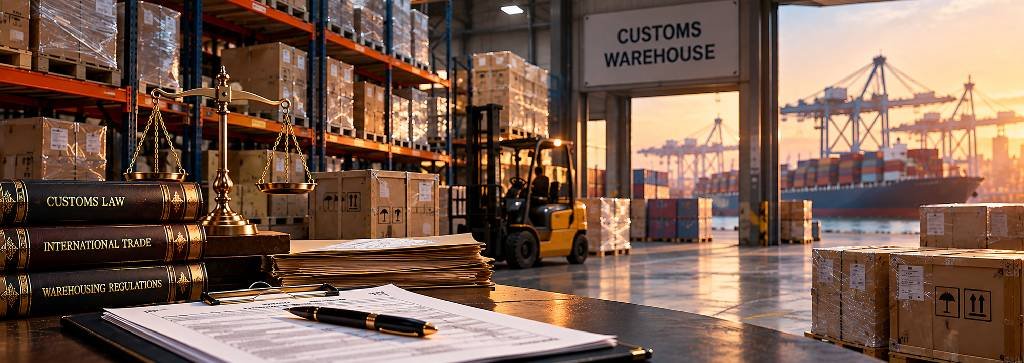

For importers, a Customs Bank Guarantee can sometimes provide a practical route for obtaining release of goods while a customs investigation or adjudication is still pending. Customs authorities may permit provisional release where goods have been seized, subject to a bond and security or other conditions. Section 110A of the Customs Act, 1962 gives the competent authority power to release seized goods provisionally pending an adjudication order. The exact conditions depend on the nature of the goods, the alleged violation, the revenue involved and the circumstances of the case.
What Is a Customs Bank Guarantee?
A customs bank guarantee is a financial security issued by a bank in favour of the President of India, through the appropriate customs authority. It protects the revenue or other government interests if the importer fails to fulfil obligations imposed as a condition for release or clearance. The guarantee is different from an ordinary commercial guarantee. Its wording, validity, beneficiary details, amount and invocation conditions are important. Under the electronic customs bond framework, bank guarantees can be linked with the relevant customs bond through ICEGATE. CBIC has also introduced electronic processes involving the National e Governance Services Limited for transmission and verification of electronic bank guarantees. A bank guarantee also does not mean Customs has finally accepted the importer’s position. It generally provides security while the underlying customs issue remains unresolved.
When Can Customs Release Goods Against a Bank Guarantee?
The most important statutory provision is Section 110A of the Customs Act, 1962. It permits goods, documents or things seized under Section 110 to be released provisionally pending an order from the adjudicating authority. The release can be subject to conditions and security considered appropriate by the competent authority. This mechanism is particularly relevant where goods have been seized during an investigation involving issues such as classification, valuation, misdeclaration, prohibited or restricted goods, country of origin, import policy compliance or possible evasion of customs duty.
A provisional release application is normally made by the owner or person having an interest in the seized goods. Customs then considers whether release is appropriate and, if so, determines the conditions. The Customs Manual records provisional release under Section 110A as a mechanism generally available to importers, while identifying circumstances in which provisional release may not ordinarily be permitted. The framework also recognises the possibility of using a bond and bank guarantee to secure government interests.
What Is the Difference Between a Bond and a Bank Guarantee?
A bond and a bank guarantee serve different functions. A bond is an undertaking given by the importer to fulfil specified obligations. It may cover the payment of duty, fine or penalty eventually determined through adjudication. A bank guarantee provides additional financial security. If the importer fails to meet the relevant obligation, the government may have recourse to the guaranteed amount, subject to the terms of the guarantee and applicable law.
CBIC’s framework for provisional release states the bond should contain an undertaking to pay the duty, fine and penalty adjudged by the adjudicating authority, subject to available appellate remedies. Where a bank guarantee is used, it should remain valid until final adjudication. The distinction is important because execution of a bond alone does not necessarily satisfy a customs order requiring additional security. Conversely, providing a bank guarantee does not replace every other condition imposed in the provisional release order.
How Does Customs Decide the Amount of Bank Guarantee?
There is no single percentage applicable to every provisional release situation. The amount can depend on the estimated customs duty, possible differential duty, redemption fine, penalty and other risks associated with the case. The facts surrounding the seizure also matter.
For example, a recent customs adjudication proceeding recorded provisional release under Section 110A subject to execution of a bond for the re determined value of the goods and a bank guarantee or security deposit covering potential redemption fine and penalties.
Another recent Delhi High Court proceeding involved a provisional release order requiring a bond equal to the assessable value and a substantial bank guarantee to cover estimated differential duty, redemption fine and potential penalty. These examples illustrate why importers should not assume a standard formula applies to every case.
Can Customs Insist on a Bank Guarantee?
A bank guarantee can be required as a condition of provisional release where the competent authority considers security necessary. Section 110A expressly gives the authority power to impose conditions and require security. However, the power is not necessarily unlimited. Courts have examined whether the security demanded is justified by the circumstances of the case. In 2024, the Delhi High Court considered a provisional release matter where a bank guarantee had been demanded. The Court held the competent authority has discretion under Section 110A to impose appropriate conditions but also emphasised the need for reasons supporting the requirement for a bank guarantee. The Court directed reconsideration of provisional release subject to an appropriate bond and other security warranted by the facts. This is important for importers. A demand for security should be examined in light of the statutory framework, the facts of the seizure and the reasons recorded in the provisional release order.
Does the Bank Guarantee Have to Cover the Entire Customs Duty?
Not necessarily. The amount depends on the legal basis for the security and the circumstances of the case. In some matters, Customs may seek security for estimated differential duty. In others, the security may also account for potential redemption fine and penalties. For example, a 2026 customs appellate matter considered a provisional release condition involving a bank guarantee equal to 10 per cent of the value of the goods and a bond covering 100 per cent of the value. The dispute concerned whether Customs had applied the conditions consistently.
The appropriate amount must therefore be assessed from the actual provisional release order rather than assumed from another customs case. Importers should also distinguish provisional release security from security required under other customs procedures. For example, CBIC’s guidance on provisional assessment under Section 18 deals separately with bonds and bank guarantees or cash deposits in circumstances where assessment remains provisional.
What Happens After the Bank Guarantee Is Submitted?
Providing the bank guarantee does not automatically mean the goods will be released immediately. The importer must comply with all conditions contained in the provisional release order. These may include execution of a bond, payment of undisputed duty, submission of documents, compliance with specific regulatory requirements and completion of other customs formalities. Once the required conditions are satisfied, Customs can process the provisional release in accordance with the order.
Customs procedures increasingly support electronic bonds and electronic bank guarantees. CBIC’s electronic bond framework permits an e bank guarantee to be linked with the relevant customs bond on ICEGATE. The bank transmits the guarantee details through the designated electronic system, allowing Customs to verify the guarantee. Importers should therefore ensure the bank guarantee is issued in the prescribed format and contains accurate details. Errors in the beneficiary, bond number, amount or validity period can cause avoidable delays.
What Happens if the Bank Guarantee Expires?
Expiry of a bank guarantee can create serious problems. CBIC’s provisional release guidelines state the guarantee should contain a provision requiring the issuing bank to keep it renewed and valid until final adjudication. If the guarantee is not renewed, the guidelines contemplate the guaranteed amount being credited to the government account by the bank.
The customs multipurpose bond framework similarly provides for renewal of security before expiry and contemplates encashment where the security is not renewed as required. Importers should therefore maintain a separate tracking system for every customs bank guarantee. The expiry date should be monitored well before the deadline. A request for extension should not be left until the final days.
Can the Bank Guarantee Be Reduced?
In appropriate cases, an importer may seek modification of the conditions imposed for provisional release. The possibility of reduction depends on the facts and the authority’s discretion. It may be relevant where the importer provides additional documents, resolves part of the investigation, demonstrates a lower revenue risk or establishes circumstances supporting less onerous security.
Courts have also examined whether Customs has imposed disproportionate or insufficiently reasoned security conditions. The Delhi High Court decision discussed above demonstrates the importance of reasons supporting the requirement for a bank guarantee. An importer should therefore review the provisional release order carefully before accepting the security amount as final and unavoidable.
What If Customs Ultimately Finds a Violation?
Provisional release does not conclude the customs proceedings. The investigation can continue after goods are released. Customs may issue a show cause notice and proceed with adjudication. The adjudicating authority may determine whether the goods are liable to confiscation and whether duty, interest, redemption fine or penalties are payable. If the final order creates a liability covered by the bond or bank guarantee, the security can become relevant.
A 2026 customs adjudication order illustrates this point. The authority recorded that a bank guarantee furnished under Section 110A for provisional release was intended to safeguard government revenue and liabilities arising from adjudication. Following confiscation and penalty findings, the authority held the guarantee liable to appropriation. The importer may have statutory appellate remedies against the adjudication order. However, businesses should not assume the bank guarantee disappears simply because an appeal is filed.
What Should Importers Check Before Giving a Bank Guarantee?
The first step is to examine the provisional release order carefully. The importer should understand why security has been demanded, what liability it is intended to secure and how the amount has been calculated. The wording of the guarantee should also be checked. It should correspond with the prescribed customs format and the relevant bond. The beneficiary, amount, validity period and bond reference should be accurate.
Businesses should also consider whether the guarantee provides adequate time for investigation and adjudication. An unnecessarily short validity period can result in repeated renewal requests and additional banking costs. Where the underlying dispute involves consumer facing products or regulatory issues, obtaining advice from a leading consumer protection attorney may help businesses understand the wider implications of the customs proceedings. Where the dispute concerns valuation, duty exposure or broader tax consequences, a tax advisory law firm may assist with the financial and tax aspects of the matter.
Customs Bank Guarantee and Provisional Assessment Are Not the Same
Businesses sometimes confuse provisional release with provisional assessment. Provisional release under Section 110A concerns goods seized during customs proceedings. It allows the goods to be released before final adjudication, subject to conditions. Provisional assessment under Section 18 addresses situations where Customs cannot finally assess the duty at the time of assessment because further information, documents, examination or testing is required. A bond and, where applicable, security may be required for the difference between provisional and final duty.
The two mechanisms can therefore involve bank guarantees but arise from different statutory situations. Understanding this distinction is important when preparing an application or challenging the amount of security demanded.
How Businesses Can Avoid Delays in Provisional Release
Businesses should prepare their provisional release strategy as soon as goods are seized. Waiting for the investigation to progress before addressing release can increase storage, demurrage and inventory costs. The importer should collect the relevant Bills of Entry, invoices, packing lists, purchase contracts, payment records, product literature, technical documents and licences. If classification or valuation is disputed, supporting technical and commercial evidence can be particularly useful.
The business should also calculate the financial impact of the proposed security. A large bank guarantee can affect banking limits and working capital even when no cash is immediately paid to Customs. Where the security requirement appears disproportionate, the importer may consider seeking modification through the appropriate administrative or judicial route. Recent judicial decisions show courts have scrutinised the reasons and proportionality behind provisional release conditions in appropriate cases.
Conclusion
A Customs Bank Guarantee can be an important mechanism for securing provisional release of seized goods while customs proceedings continue. Section 110A of the Customs Act, 1962 provides the statutory basis for provisional release pending adjudication, subject to conditions and security considered appropriate by the competent authority. However, a bank guarantee is not an automatic entitlement to release. Customs will consider the circumstances of the case and the risks to government revenue. The amount and conditions can vary significantly between cases.
For importers, careful preparation is essential. The provisional release order should be reviewed closely, the security amount should be understood, the guarantee should follow the required format and its validity should be monitored until the underlying proceedings are resolved. A well managed provisional release process can allow businesses to regain possession of valuable goods without waiting for lengthy adjudication. At the same time, importers should remember the goods remain connected to the pending customs proceedings until the dispute is finally resolved.