
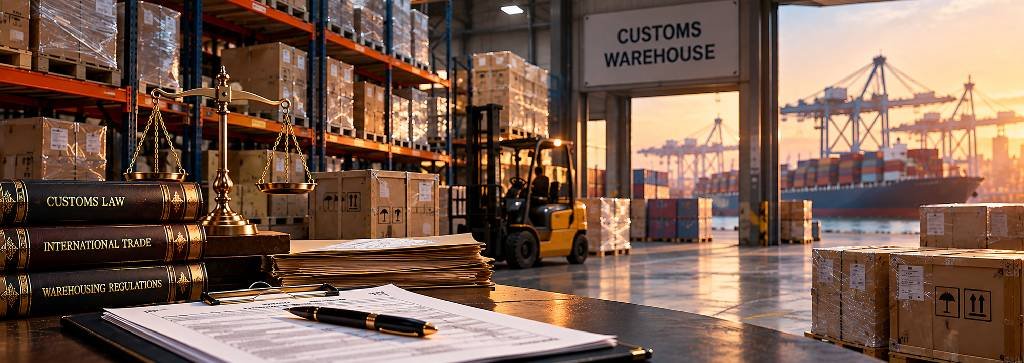
For importers, Customs Warehousing Rules provide an important mechanism for storing imported goods without immediately paying the applicable customs duty. The system can help businesses manage cash flow, defer duty payments and hold goods until they are required for domestic clearance or export. However, warehousing is not simply a storage arrangement. Goods remain subject to customs control, documentation requirements and statutory conditions throughout the warehousing period. The framework is primarily governed by Chapter IX of the Customs Act, 1962, along with regulations governing warehouse custody, handling and operations. Understanding these requirements is essential for importers seeking to avoid duty demands, penalties, interest and compliance disputes.
What Are Customs Warehousing Rules?
Customs warehousing allows eligible imported goods to be deposited in a licensed customs warehouse without immediate payment of import duty. Duty generally becomes payable when the goods are cleared for home consumption. Goods may also be exported or moved to another warehouse in accordance with the Customs Act and applicable procedures. The framework is designed to provide commercial flexibility while protecting government revenue. An importer can therefore postpone the domestic clearance of goods until the goods are needed in the Indian market. This can be particularly useful where inventory is held for future sales, production requirements or export activities.
The Customs Act contains the principal provisions in Chapter IX. Sections 57 and 58 deal with public and private warehouses, while Section 58A covers special warehouses. Sections 59 and 60 address the warehousing bond and permission for movement of goods into a warehouse. Sections 61 to 73 deal with the warehousing period, treatment of goods, removal, clearance and cancellation of bonds.
Types of Customs Warehouses in India
The customs warehousing framework recognises different categories of warehouses. Public warehouses are licensed under Section 57. They can generally be used by importers who require bonded storage without operating their own private customs warehouse. Private warehouses are licensed under Section 58. These facilities are generally operated by the importer or another eligible entity for storing goods under customs control. Special warehouses are covered by Section 58A and involve additional controls due to the nature of goods or the regulatory requirements applicable to them.
The distinction matters because the licensing conditions, operational controls and responsibilities can differ depending on the warehouse category. Importers should therefore determine the appropriate warehousing model before moving goods into storage. The Warehouse (Custody and Handling of Goods) Regulations, 2016 also prescribe requirements relating to warehouse keepers, security, facilities, equipment, personnel, record keeping and customs supervision. For example, a warehouse licensee must appoint a suitable warehouse keeper and maintain facilities capable of securing goods and controlling access.
How Imported Goods Enter a Customs Warehouse
The warehousing process begins with the importer filing a Bill of Entry for warehousing. Section 46 permits an importer to make an entry for warehousing through the customs automated system, subject to the prescribed procedure. The importer must also ensure the accuracy and completeness of information provided in the Bill of Entry and the authenticity and validity of supporting documents.
The importer must then comply with the warehousing bond requirements under Section 59. The current statutory framework provides for a warehousing bond and additional security as prescribed. The Customs Act currently specifies a bond amount linked to three times the duty assessed for the relevant goods under Section 59.
Once the relevant requirements have been satisfied, the proper officer may permit removal of the goods from the customs station for deposit in the warehouse under Section 60. The goods must then be deposited and handled in accordance with the prescribed requirements. Importers should maintain consistency between the Bill of Entry, commercial documents, warehouse records and the physical goods. Differences in quantity, description, identification marks or other material particulars can create avoidable customs issues.
How Long Can Goods Remain in a Customs Warehouse?
The permitted warehousing period depends on the nature and intended use of the imported goods. Under Section 61, goods falling within the specified categories relating to export-oriented undertakings, electronic hardware technology parks, software technology parks or warehouses where manufacture or other operations are permitted under Section 65 may remain warehoused until the relevant clearance or consumption requirements are met.
For other goods, the general period is one year from the date of the order permitting deposit in the warehouse. The Principal Commissioner or Commissioner of Customs may extend this period by up to one year at a time when sufficient cause is shown. The period may also be reduced where goods are likely to deteriorate. Importers should therefore maintain a clear ageing system for bonded inventory. Waiting until the end of the permitted period can create unnecessary pressure, particularly where an extension is required.
Another important consideration is interest. For goods falling under the general category in Section 61, interest becomes payable when the goods remain warehoused beyond ninety days. The interest applies to the duty payable at the time of clearance and continues for the relevant period until payment. This means warehousing can defer customs duty, but it does not necessarily eliminate the financial cost of prolonged storage.
Customs Control Continues After Warehousing
Warehousing does not remove goods from the customs framework. Imported goods remain subject to customs control while they are stored in the warehouse. The warehouse operator must maintain appropriate records and controls. The 2016 Regulations require suitable facilities, equipment and personnel for secure storage and access control. They also contemplate customs examination and electronic systems for accounting for the receipt, storage, operations and removal of goods.
Importers should therefore treat bonded inventory differently from ordinary domestic inventory. Stock movements should be properly documented. Any permitted operations should be recorded. Transfers should follow the applicable customs procedure. Unauthorised removal or improper handling can have serious consequences. Section 71 provides a general restriction on taking warehoused goods out of a warehouse except in accordance with the Customs Act. Section 72 addresses goods improperly removed from a warehouse and can result in liability for the applicable duty, interest and other consequences.
Can Businesses Undertake Manufacturing in a Customs Warehouse?
Yes, subject to the applicable statutory permissions and regulations. Section 65 permits manufacture and other operations in relation to goods in a warehouse. The Manufacture and Other Operations in Warehouse Regulations provide a framework for businesses seeking to undertake permitted operations using warehoused goods. This can be commercially significant for manufacturers importing raw materials, components or other inputs.
CBIC has also issued guidance on manufacture and other operations in warehouses, including the operation of the framework under Section 65. The customs bond framework can cover obligations relating to such operations, including compliance with applicable customs and tax provisions and the treatment of resultant goods. Businesses considering this model should assess the customs treatment of imported inputs, processing activities, resultant goods, waste and removals before commencing operations.
Clearing Warehoused Goods for Home Consumption
When an importer wants to bring warehoused goods into the domestic market, Section 68 becomes relevant. The importer must present the appropriate Bill of Entry for home consumption, pay the applicable import duty, interest, fine and penalties where relevant, and obtain the required clearance order.
The duty position at this stage can have a significant effect on the final landed cost of goods. Businesses should therefore consider valuation, classification, applicable exemptions, tariff changes and other relevant customs issues before deciding when to clear inventory. Warehousing may provide a useful cash flow advantage because the importer can delay the payment of import duty. However, businesses should not assume the final duty liability will remain identical to the amount originally anticipated. Changes in customs valuation, classification or applicable rates can affect the eventual amount payable.
Moving Goods from One Warehouse to Another
The Customs Act also permits the movement of warehoused goods between warehouses subject to the prescribed procedure. Section 67 deals with removal from one warehouse to another. Such movement should not be treated as an ordinary commercial transfer. Customs records, permissions, bonds and warehouse documentation must be aligned with the movement.
The warehousing bond also continues to have significance when goods are transferred. The Customs Act provides mechanisms for continuing obligations and fresh bonds or security where applicable. Businesses should therefore coordinate closely with warehouse operators, customs brokers and internal finance teams before transferring bonded stock.
Why Documentation Matters for Importers
Documentation is one of the most important aspects of customs warehousing compliance. Importers should maintain a clear audit trail covering the arrival of goods, warehousing documents, stock records, permissions, movements, processing activities and eventual clearance. Section 46 places responsibility on the importer for the accuracy and completeness of information submitted in the Bill of Entry. It also requires attention to supporting documents and compliance with restrictions or prohibitions applicable to the goods.
A strong documentation process can help businesses respond effectively to customs queries or audits. It can also reduce the risk of discrepancies between physical stock and electronic records. Where complex classification, valuation or duty questions arise, businesses may consider obtaining advice from a consumer protection law attorney where the issue has implications involving consumer facing goods or regulatory obligations. Customs matters can also have a direct tax impact, making coordination with a tax litigation lawyer useful when a dispute develops into a demand or appellate proceeding.
Common Compliance Risks Under Customs Warehousing Rules
One of the most common risks is allowing goods to remain in the warehouse beyond the permitted period without taking appropriate action. Another is failing to account accurately for bonded stock. Unauthorised removal is another serious concern. A business may face duty demands and other consequences if goods are removed without the required customs permission.
Poor documentation can create similar problems. A discrepancy between invoices, Bills of Entry, warehouse records and physical inventory may trigger scrutiny. Businesses should also pay close attention to changes in the legal status of goods, especially where manufacturing or other operations are undertaken in the warehouse. The Supreme Court has recognised the significance of the warehousing framework and the obligations associated with warehousing bonds, permitted periods and removal of warehoused goods.
How Businesses Can Improve Customs Warehousing Compliance
A practical compliance system should begin before goods arrive in India. Importers should identify whether warehousing is commercially appropriate, determine the correct warehouse category and understand the applicable bond requirements. Once goods enter the warehouse, businesses should track every consignment through its lifecycle. An internal system should identify the date of the warehousing order, applicable permitted period, interest implications, expected clearance date and any extension requirement.
Stock reconciliation should also be conducted regularly. Physical quantities should correspond with customs records. Any loss, damage, processing, transfer or removal should be supported by the appropriate documentation. Businesses should also review their warehouse arrangements periodically. Changes in product lines, import volumes, manufacturing activities or supply chain structures may require changes in customs procedures.
Conclusion
Customs warehousing can provide Indian importers with valuable flexibility by allowing eligible goods to remain under customs control while postponing the immediate payment of import duty. However, the benefit comes with significant compliance responsibilities. The Customs Warehousing Rules operate through a broader statutory and regulatory framework covering warehouse licensing, bonds, security, permitted periods, interest, stock control, manufacturing activities, transfers and final clearance. The Customs Act, 1962 remains the central source of these obligations, supported by the relevant customs regulations and CBIC procedures.
For importers, the safest approach is to treat bonded inventory as a closely controlled customs asset. Accurate records, timely clearances, proper permissions and regular monitoring can help reduce the risk of duty demands, interest and penalties while allowing businesses to obtain the commercial benefits of customs warehousing