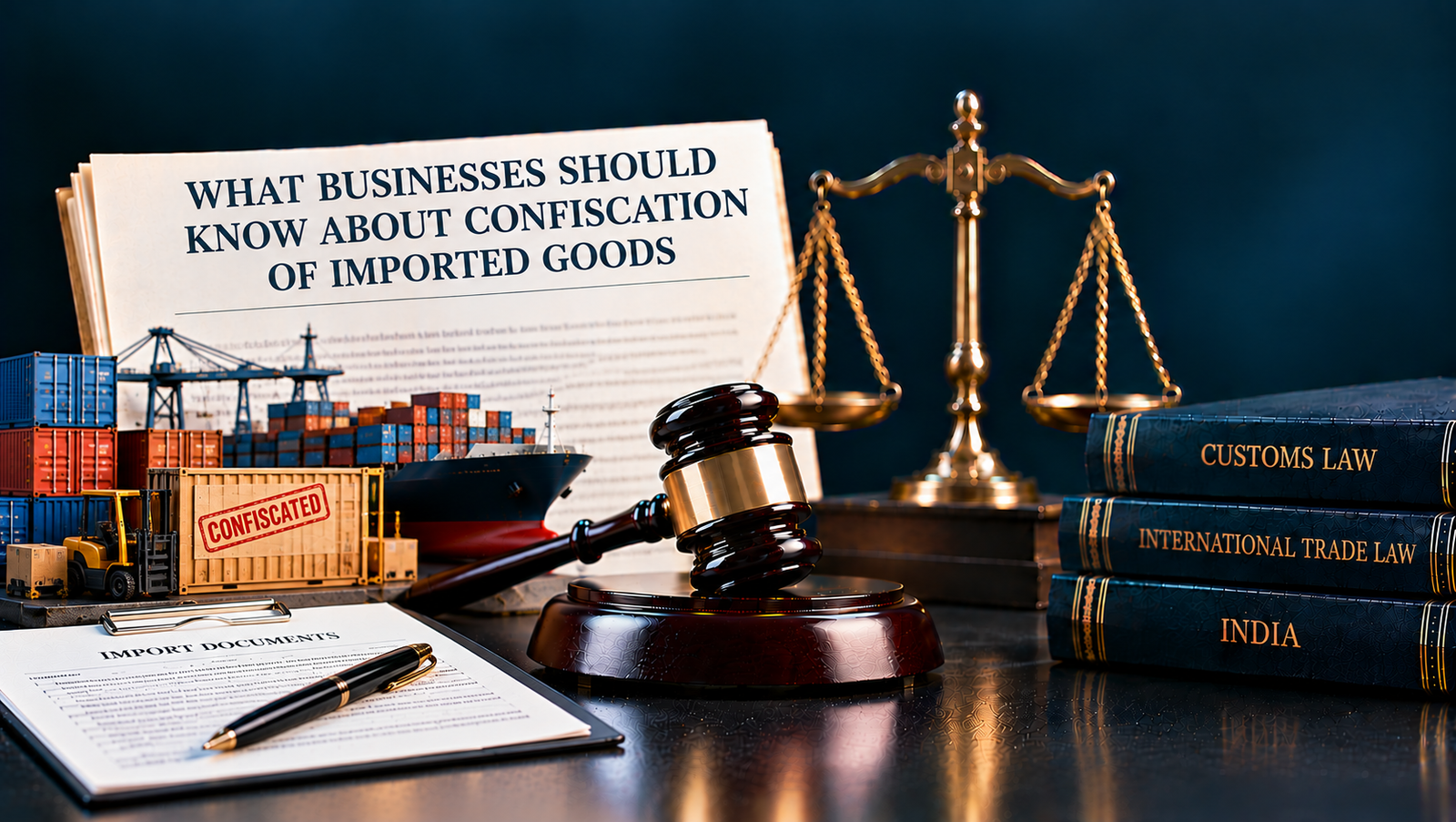
Importing goods into India involves more than paying customs duty and completing clearance formalities. Businesses must also comply with restrictions, licensing conditions, valuation requirements, declarations and other customs obligations. Failure to comply can result in detention or seizure of goods and, in serious cases, Customs Goods Confiscation under the Customs Act, 1962. Confiscation can have significant financial and commercial consequences because it may affect ownership of the goods, delay supply chains and expose businesses to redemption fines and penalties.
For importers, understanding when goods may be confiscated and what procedural rights are available is essential. A sound customs compliance process can reduce the risk of disputes and help businesses respond effectively when customs authorities raise objections.
What Does Customs Goods Confiscation Mean?
Confiscation is a statutory action under which goods become liable to be taken over by the Central Government because they fall within circumstances specified under the Customs Act. It is different from seizure. Under Section 110 of the Customs Act, a customs officer may seize goods where there is reason to believe they are liable to confiscation. Seizure is therefore an investigative or protective step. It does not by itself mean the goods have already been confiscated.
Confiscation generally follows adjudication. The customs authority must consider the alleged violation and provide the importer with the statutory opportunity to respond before passing an order of confiscation. Once goods are confiscated, Section 126 provides that they vest in the Central Government. This distinction is important for businesses because a seized consignment may still be capable of being released during the proceedings.
When Can Imported Goods Be Confiscated?
Section 111 of the Customs Act sets out several circumstances in which imported goods become liable to confiscation. The provision covers a wide range of customs violations. Goods may be liable to confiscation where they are imported contrary to a prohibition imposed under the Customs Act or another applicable law. Concealed dutiable or prohibited goods may also attract confiscation. The provision further covers goods removed from a customs area or warehouse without proper permission.
Misdeclaration is another important risk. Goods may become liable to confiscation where they are not included in the relevant entry, exceed the quantity declared, or do not correspond with the declaration in material respects, including aspects relating to value. This makes accurate documentation particularly important for commercial importers.
Conditional exemptions can also create exposure. Where goods were imported subject to a specific condition relating to duty exemption or another import requirement, failure to observe the condition may lead to confiscation unless the non compliance was properly sanctioned by the customs authorities.
Businesses importing goods under preferential duty arrangements must also consider the specific conditions attached to such treatment. A claim made contrary to the applicable customs rules can create confiscation exposure.
Seizure and Confiscation Are Not the Same
The terms seizure and confiscation are sometimes used interchangeably, but they have different legal consequences. Seizure occurs when customs authorities take possession or control of goods because they have reason to believe the goods may be liable to confiscation. The Customs Act also permits provisional release of seized goods under Section 110A, subject to a bond, security and other conditions imposed by the adjudicating authority.
Confiscation is a later legal determination. It follows adjudication of the alleged customs violation. Once an order of confiscation is passed, the statutory consequences under Section 126 arise. This distinction gives importers an important opportunity to address the allegations before the goods are finally confiscated.
The Importance of the Show Cause Notice
Before an order of confiscation or penalty is passed, Section 124 requires the concerned person to receive a notice setting out the grounds for the proposed action. The importer must also be given an opportunity to make a representation and a reasonable opportunity of being heard. The show cause notice therefore becomes a critical document in customs proceedings. Businesses should examine the precise allegations, statutory provisions relied upon, documents supporting the allegations and the proposed consequences.
The Supreme Court has also emphasised the importance of procedural fairness in customs adjudication. In Kothari Filaments, the Court recognised the need for effective disclosure and access to relevant investigative material where such material is relied upon for confiscation or penalty proceedings. An importer should therefore avoid treating a show cause notice as a routine administrative communication. The response can materially influence the eventual adjudication.
What Is the Effect of Confiscation on the Business?
Confiscation can create several layers of commercial exposure. First, the business may lose control over the imported goods. Section 126 provides that confiscated goods vest in the Central Government, with the adjudicating officer taking and holding possession.
Second, the business may face a redemption fine where the law permits release of the goods upon payment of a prescribed fine. This can add a substantial cost to the transaction. Third, a separate penalty may arise against persons involved in the improper importation. Section 112 deals with penalties for acts or omissions which render imported goods liable to confiscation. It also covers persons who acquire possession of or deal with goods while knowing, or having reason to believe, they are liable to confiscation. The financial impact can therefore extend beyond the customs duty itself.
Can Businesses Get Confiscated Goods Released?
In appropriate circumstances, businesses may seek provisional release before the adjudication is completed. Section 110A permits seized goods to be released to the owner pending the order of the adjudicating authority. Such release can be subject to a bond, security and other conditions. Provisional release can be particularly important where the goods are commercially sensitive, perishable, required for manufacturing or connected with time sensitive customer commitments. Businesses should, however, distinguish provisional release from final resolution of the customs dispute. Release of the goods does not necessarily mean the underlying allegations have been accepted or withdrawn. The conditions imposed for provisional release can also have substantial financial implications. Businesses should therefore assess the bond and security requirements carefully before accepting them.
What Is Redemption Fine?
Section 125 deals with the option of paying a fine in lieu of confiscation. For goods other than prohibited goods, the statutory provision requires the adjudicating authority to give the owner an option to pay such fine in lieu of confiscation, subject to the conditions contained in the provision. For prohibited goods, the provision gives the authority discretion regarding whether such an option should be offered.
The law also places a ceiling on the redemption fine. It cannot exceed the market price of the confiscated goods less, in the case of imported goods, the duty chargeable on them. Redemption fine should not be confused with a penalty. They serve different statutory purposes and may arise alongside customs duty and other liabilities. The Supreme Court has also recognised the distinction between customs duty and the consequences flowing from confiscation and redemption. These liabilities operate within separate statutory frameworks.
How Businesses Can Reduce the Risk of Confiscation
Effective customs compliance begins before the goods arrive in India. Importers should establish clear internal processes for classification, valuation, country of origin, licensing and documentation. The Bill of Entry and supporting records should accurately describe the goods. Product descriptions should be consistent across invoices, packing lists, purchase orders and technical documents. Where goods are subject to regulatory restrictions, businesses should verify the relevant permissions before shipment.
Contractual arrangements with overseas suppliers also deserve attention. Importers should understand who is responsible for product specifications, documentation, regulatory approvals and consequences arising from inaccurate information. Businesses should maintain an audit trail for customs declarations and supporting documents. Regular internal reviews can identify recurring classification or valuation issues before they become enforcement concerns.
Where an importer receives a customs query, detention communication or show cause notice, the response should be based on the actual facts and documentary record. Seeking consumer law legal advice may also be relevant where imported goods involve consumer facing products, regulatory obligations or disputes concerning the downstream consequences of a customs action. Tax and customs implications can overlap, particularly where valuation, exemptions, business restructuring or related party transactions are involved. Businesses should therefore consider the wider financial implications and, where appropriate, obtain advice from corporate tax lawyers alongside customs specialists.
What Should an Importer Do After Receiving a Confiscation Notice?
The first step is to identify precisely what customs authorities allege. The importer should examine the classification, valuation, quantity, description, licensing position and documents relied upon by the department. The next step is to preserve the relevant evidence. This may include purchase agreements, commercial invoices, technical literature, correspondence with suppliers, payment records, certificates of origin, licences and earlier customs clearances.
The importer should then prepare a reasoned response to the show cause notice. A general denial may not be sufficient. The response should address each allegation and explain why the statutory conditions for confiscation are not satisfied, where such a defence is available. Where the goods have already been seized, the business should also consider whether provisional release is appropriate. Section 110A provides a statutory route for seeking release pending adjudication.
Can a Confiscation Order Be Challenged?
A confiscation order is not necessarily the end of the matter. Customs legislation provides appellate mechanisms for challenging adjudication orders, subject to the applicable statutory requirements and limitation periods. The importer should examine the order carefully and determine the appropriate appellate forum. Delay can have serious consequences, so businesses should identify the limitation period promptly after receiving an order.
The grounds of challenge will depend on the facts. They may concern classification, valuation, interpretation of an import restriction, evidentiary issues, procedural fairness, applicability of Section 111 or the quantum of redemption fine and penalty. Businesses should also distinguish between challenging the confiscation itself and challenging the amount of fine or penalty imposed.
Why Customs Compliance Should Be a Business Priority
Customs disputes can disrupt more than a single shipment. A detained or confiscated consignment may affect production schedules, customer commitments, inventory planning and working capital. For businesses with regular import operations, customs compliance should therefore form part of the broader risk management framework. Import teams, finance personnel, procurement teams and legal advisers should work from consistent product and transaction information.
Particular attention is warranted where the business imports regulated products, relies on concessional duty schemes, purchases goods from related overseas entities or frequently changes suppliers and product specifications. A proactive approach can reduce the possibility of incorrect declarations and provide stronger evidence if customs authorities later question an import transaction.
Conclusion
Customs Goods Confiscation can have serious consequences for an importer because it may result in loss of goods, redemption fine, penalties and prolonged disruption to business operations. The risk commonly arises from prohibited imports, concealment, misdeclaration, incorrect entries, unauthorised removal or failure to comply with conditions attached to an exemption or import permission.
Businesses should understand the distinction between seizure and confiscation. Seizure does not automatically mean the goods have been finally confiscated. The importer is entitled to the procedural safeguards contained in Section 124, including notice, an opportunity to respond and a reasonable hearing.
Strong documentation, accurate declarations and timely legal responses can make a significant difference. Importers should treat customs compliance as an ongoing business responsibility rather than an issue arising only after goods are detained.