
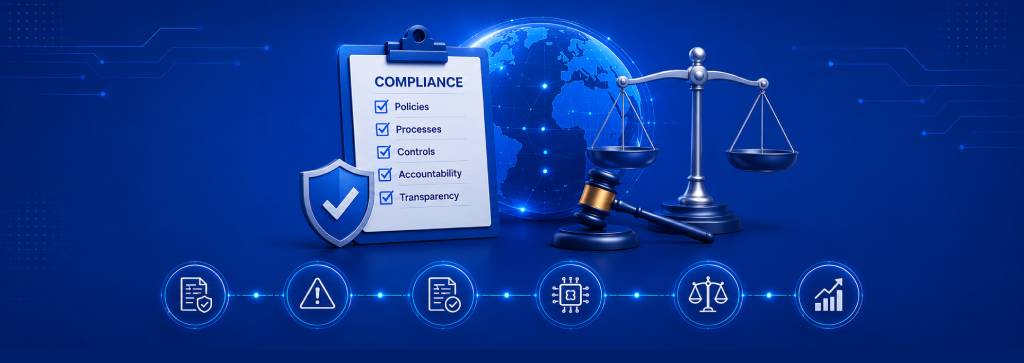
In recent years, Compliance Thinking Evolution has become a defining element of modern business strategy. Organisations no longer treat compliance as a routine obligation. It is now viewed as a strategic function that supports growth, builds trust, and reduces long-term risk. Businesses across industries are rethinking how they approach compliance in response to changing regulations, digital transformation, and increased stakeholder expectations.
Compliance thinking has shifted from a reactive model to a proactive and integrated approach. Companies now recognise that strong compliance frameworks contribute to operational efficiency and sustainable success. This evolution reflects a deeper understanding of how governance, risk, and compliance interact in complex business environments.
Compliance Thinking Evolution in Modern Business
Compliance Thinking Evolution refers to the transformation of compliance from a rule-based function into a strategic and value-driven discipline. Earlier, organisations focused mainly on meeting legal requirements and avoiding penalties. Today, compliance is embedded in decision-making processes and business planning. Modern businesses adopt a forward-looking approach. They anticipate regulatory changes and prepare in advance. This shift reduces uncertainty and improves resilience. Compliance is now aligned with broader organisational goals, including growth, innovation, and reputation management. This evolution also involves greater accountability. Leadership teams are expected to demonstrate a clear commitment to compliance. Boards and senior executives play an active role in shaping compliance culture and policies.
From Reactive Compliance to Strategic Integration
Traditional compliance models relied on responding to issues after they occurred. This reactive approach often led to financial losses and reputational damage. The evolving landscape demands a different mindset. Businesses now integrate compliance into core operations. It becomes part of daily processes rather than a separate function. This integration ensures that compliance considerations are included in every decision.
Strategic integration also improves efficiency. When compliance is embedded in workflows, organisations can identify risks early and address them promptly. This reduces the cost and impact of potential violations. Companies also use data-driven insights to enhance compliance. Analytics tools help monitor activities and detect irregularities. This proactive approach strengthens overall governance.
The Role of Technology in Compliance Evolution
Technology has played a crucial role in shaping compliance thinking. Digital tools enable organisations to manage compliance more effectively. Automation reduces manual effort and improves accuracy. Regulatory technology, often referred to as RegTech, has gained prominence. It helps businesses track regulatory changes, manage documentation, and ensure timely reporting. These tools provide real-time visibility into compliance status.
Cybersecurity has become a central concern. Businesses must protect sensitive data and ensure privacy. Compliance frameworks now include strict data protection measures. Awareness of digital risks is essential in this context. Artificial intelligence and machine learning are also influencing compliance practices. These technologies can identify patterns and predict potential risks. This enhances the ability to prevent violations before they occur.
Changing Regulatory Landscape
The regulatory environment has become more complex and dynamic. Governments and regulatory bodies are introducing new laws to address emerging challenges. These include data protection, environmental standards, and corporate governance requirements. Businesses must stay updated with these changes. Failure to comply can result in penalties and legal action. Compliance thinking evolution emphasises continuous monitoring and adaptation.
Globalisation adds another layer of complexity. Companies operating across multiple jurisdictions must comply with different regulations. This requires a comprehensive and coordinated approach. Organisations are also expected to maintain transparency. Reporting requirements have increased, and stakeholders demand greater accountability. Compliance frameworks must address these expectations effectively.
Compliance as a Driver of Business Growth
Modern organisations recognise compliance as a driver of growth rather than a constraint. Strong compliance practices build trust with customers, investors, and regulators. This trust creates opportunities for expansion and collaboration. Compliance also enhances operational efficiency. Clear policies and procedures reduce ambiguity and improve decision-making. This leads to better resource utilisation and reduced risk exposure.
Businesses seeking sustainable growth often engage legal experts to strengthen their compliance frameworks. Working with a corporate lawyer in India for business growth can help organisations align legal requirements with strategic objectives. Legal guidance ensures that compliance supports rather than hinders progress. In competitive markets, compliance can become a differentiator. Companies with robust frameworks are more likely to attract investors and partners.
The Importance of Compliance Culture
Compliance thinking evolution is not limited to systems and processes. It also involves building a strong organisational culture. Employees at all levels must understand the importance of compliance and their role in maintaining it. A positive compliance culture encourages ethical behaviour and accountability. It reduces the likelihood of misconduct and promotes transparency. Training and awareness programmes play a key role in achieving this.
Leadership commitment is essential. When senior management prioritises compliance, it sets a clear example for the organisation. This creates a culture where compliance is seen as a shared responsibility. Open communication is another important factor. Employees should feel comfortable reporting concerns without fear of retaliation. This helps organisations identify and address issues early.
Risk-Based Approach to Compliance
One of the most significant aspects of compliance thinking evolution is the shift towards a risk-based approach. Instead of applying uniform controls, organisations focus on areas with higher risk exposure. This approach allows businesses to allocate resources more effectively. High-risk areas receive greater attention, while low-risk areas require less intensive monitoring. This improves efficiency without compromising compliance.
Risk assessments are conducted regularly to identify potential issues. These assessments consider factors such as industry trends, regulatory changes, and internal processes. The insights gained help organisations develop targeted strategies. A risk-based approach also enhances flexibility. Businesses can adapt their compliance frameworks to changing conditions. This ensures that compliance remains relevant and effective.
Compliance in Startups and Emerging Enterprises
Startups operate in fast-paced environments where innovation and growth are priorities. However, compliance remains critical. Ignoring compliance can lead to significant challenges in later stages. Compliance thinking evolution has influenced how startups approach governance. Many early-stage companies now integrate compliance into their business models. This helps them build a strong foundation for growth.
Legal and advisory support is particularly valuable for startups. Engaging in startup advisory in India enables businesses to navigate regulatory requirements and avoid common pitfalls. Expert guidance ensures that compliance is aligned with business objectives. Investors also place importance on compliance. Startups with robust frameworks are more likely to attract funding and partnerships. This highlights the role of compliance in long-term success.
Challenges in Adapting to Evolving Compliance
Despite its benefits, adapting to evolving compliance practices can be challenging. Many organisations face resource constraints and lack specialised expertise. This can hinder the implementation of advanced compliance frameworks. Rapid regulatory changes create uncertainty. Businesses must invest time and effort to stay updated. This requires continuous learning and adaptation. Technology adoption also presents challenges. While digital tools offer advantages, they require investment and training. Organisations must ensure that employees are equipped to use these tools effectively. Resistance to change is another common issue. Employees may be accustomed to traditional approaches and reluctant to adopt new practices. Overcoming this resistance requires strong leadership and clear communication.
Future Trends in Compliance Thinking
The future of compliance thinking is likely to be shaped by several trends. Technology will continue to play a central role. Advanced analytics and automation will enhance compliance capabilities. Environmental and social considerations are gaining importance. Businesses are expected to address sustainability and ethical practices. Compliance frameworks will expand to include these aspects. Data privacy will remain a key focus. As digital interactions increase, organisations must protect sensitive information. Compliance measures will evolve to address emerging threats. Collaboration between businesses and regulators is also expected to grow. This will lead to more effective and practical compliance frameworks. Organisations that embrace these trends will be better prepared for the future.
Conclusion
Compliance Thinking Evolution reflects a fundamental shift in how businesses approach governance and regulation. It is no longer limited to avoiding penalties. Instead, it has become a strategic function that supports growth, innovation, and sustainability. Organisations that adopt modern compliance practices can navigate complex environments with confidence. They are better equipped to manage risks, build trust, and achieve long-term success. As business landscapes continue to evolve, compliance thinking will remain a critical component of effective management. Companies that invest in strong compliance frameworks today will gain a competitive advantage in the future.