
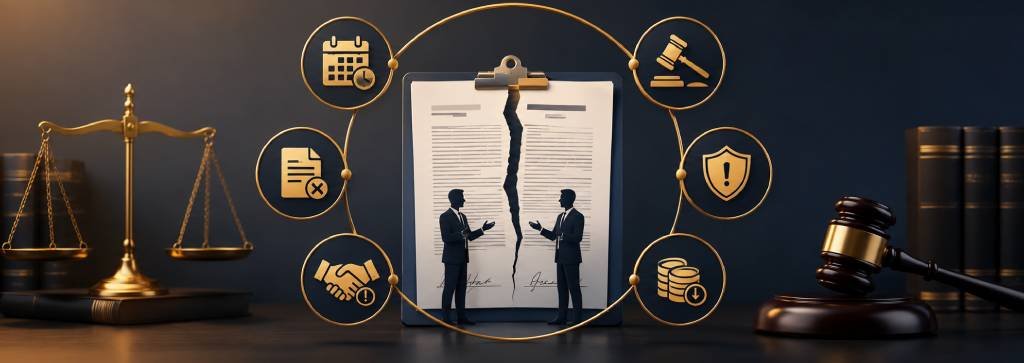
Commercial relationships are built on trust, mutual expectations, and legally binding agreements. However, even well intentioned business partnerships can face disagreements when contractual obligations are unclear or poorly managed. Contractual Issues remain one of the leading causes of commercial disputes across industries. Whether businesses are dealing with suppliers, customers, service providers, distributors, or strategic partners, weaknesses within contracts can quickly develop into costly legal conflicts.
Many commercial disputes are preventable. They often arise because agreements contain ambiguous language, incomplete provisions, unrealistic obligations, or poorly allocated responsibilities. Understanding the most common Contractual Issues helps businesses strengthen agreements, minimise legal risks, and maintain stable commercial relationships.
Understanding Contractual Issues
Contractual Issues refer to legal or commercial problems arising from the interpretation, performance, enforcement, or breach of contractual obligations. These issues may occur before, during, or after a business relationship. Every commercial contract creates rights and responsibilities for each party. When expectations are unclear or obligations are not fulfilled, disputes often follow.
Contractual problems can involve payment disputes, delayed performance, defective products, confidentiality breaches, intellectual property conflicts, regulatory compliance failures, or disagreements regarding contract interpretation. Identifying potential issues during contract negotiation significantly reduces future legal and operational challenges.
Why Commercial Disputes Often Begin with Contracts
Contracts establish the rules governing commercial relationships. When agreements fail to address important issues clearly, businesses may interpret their obligations differently. Even minor misunderstandings can develop into significant disputes if expectations are not aligned.
Commercial disputes often arise because businesses focus on reaching agreements quickly while paying insufficient attention to contract drafting. Well drafted contracts provide clarity regarding obligations, performance standards, payment terms, liability allocation, dispute resolution, and termination rights. Businesses investing in comprehensive contract management generally experience fewer disputes and stronger commercial relationships.
Ambiguous Contract Language
Ambiguity remains one of the most common causes of commercial disputes. Vague wording allows different interpretations of the same contractual provision. When parties disagree regarding meaning, disputes become almost inevitable. Terms relating to performance standards, delivery schedules, quality expectations, timelines, pricing adjustments, and reporting obligations should always be clearly defined.
Businesses should avoid broad language capable of multiple interpretations. Precision during contract drafting helps eliminate uncertainty and reduces the likelihood of future disagreements. Clear contractual language protects both parties throughout the commercial relationship.
Unclear Payment Terms
Payment related disagreements frequently lead to commercial litigation. Contracts should specify pricing structures, payment schedules, invoicing procedures, taxes, currency, reimbursement obligations, interest on overdue payments, and consequences of default. Without clear financial provisions, parties may disagree regarding payment timing, calculation methods, or outstanding balances.
Businesses should also address situations involving delayed performance, partial completion, or disputed invoices. Clear payment clauses contribute significantly to commercial certainty and financial stability. Strong drafting reduces unnecessary conflicts relating to revenue and cash flow.
Failure to Define Performance Obligations
Every commercial agreement should establish what each party is expected to deliver. One of the most significant Contractual Issues arises when contracts fail to define performance obligations adequately. Businesses should specify deliverables, timelines, quality standards, reporting requirements, service levels, acceptance procedures, and completion criteria.
If obligations remain unclear, parties may disagree regarding whether contractual commitments have been fulfilled. Well defined performance standards create accountability while reducing misunderstandings. Businesses should ensure contractual obligations remain practical and commercially realistic.
Weak Confidentiality Provisions
Modern businesses regularly exchange sensitive commercial information. Customer databases, financial information, pricing strategies, proprietary technology, business plans, and operational processes require contractual protection. Weak confidentiality clauses increase the risk of unauthorised disclosure and misuse.
Contracts should define confidential information clearly while establishing obligations relating to handling, storage, disclosure, and permitted use. Businesses frequently consult commercial contract lawyers in India to strengthen confidentiality provisions and reduce commercial risk. Strong confidentiality agreements help preserve competitive advantages and business reputation.
Intellectual Property Ownership Disputes
Intellectual property has become increasingly valuable across almost every industry. Commercial agreements involving software development, branding, research, consulting, product design, or technology services should clearly define ownership rights. Many disputes arise because contracts fail to specify whether newly created intellectual property belongs to the client, contractor, employer, or service provider.
Licensing arrangements should also establish permitted uses, restrictions, duration, and termination rights. Clear intellectual property provisions protect innovation while reducing ownership conflicts. Businesses should never assume ownership without explicit contractual language.
Inadequate Liability Clauses
Liability allocation represents one of the most important aspects of commercial contracting. Poorly drafted liability provisions often expose businesses to unexpected financial obligations. Contracts should clearly address limitation of liability, indemnities, warranties, insurance requirements, exclusions, and responsibility for third party claims.
Unbalanced liability clauses frequently become major sources of commercial disputes. Businesses should evaluate financial exposure carefully before signing agreements. Appropriate risk allocation supports commercial fairness while protecting long term business interests.
Poorly Drafted Termination Provisions
Commercial relationships sometimes need to end because of changing business priorities, market conditions, or contractual breaches. Termination clauses establish how these situations should be managed. Many disputes arise because contracts fail to define termination rights, notice periods, exit procedures, post termination obligations, or financial consequences.
Businesses should understand when termination is permitted and what responsibilities continue afterwards. Clear termination provisions reduce uncertainty and support smoother transitions when commercial relationships conclude. Effective exit planning forms an essential part of sound contract drafting.
Failure to Address Regulatory Compliance
Businesses increasingly operate within complex regulatory environments. Contracts should allocate responsibility for compliance with applicable laws, industry standards, consumer protection requirements, employment regulations, environmental obligations, and data privacy rules.
Failure to define compliance responsibilities may expose businesses to legal penalties and contractual disputes. Compliance related provisions help establish accountability while supporting lawful business operations. Commercial agreements should reflect evolving legal requirements throughout the duration of the relationship.
Inadequate Dispute Resolution Clauses
Disputes cannot always be avoided, but they can often be managed more efficiently. Many commercial agreements contain limited or poorly drafted dispute resolution provisions. Contracts should establish procedures for negotiation, mediation, arbitration, litigation, governing law, and jurisdiction.
Clear dispute resolution mechanisms reduce uncertainty while helping businesses resolve conflicts more effectively. Businesses should ensure dispute resolution processes align with the commercial nature and complexity of the agreement. Early planning often prevents unnecessary legal costs.
Ignoring Contract Amendments
Commercial relationships frequently evolve over time. Business expansion, regulatory developments, operational changes, and market conditions may require modifications to existing agreements. Many disputes arise because parties rely on informal discussions rather than documented amendments.
Contracts should specify procedures for making valid changes. Written amendments signed by authorised representatives provide greater legal certainty. Maintaining accurate contractual records reduces confusion and supports stronger governance.
Technology Related Contractual Challenges
Technology agreements have become increasingly important in modern commerce. Software licences, cloud computing arrangements, cybersecurity services, digital platforms, and artificial intelligence solutions create unique contractual risks. Businesses should review service levels, security obligations, data ownership, intellectual property rights, liability provisions, and system availability commitments carefully.
Technology related disputes often arise because agreements fail to anticipate operational challenges. Comprehensive drafting helps businesses manage digital risks more effectively. Technology contracts require ongoing review as business operations evolve.
Lack of Contract Management
Even well drafted agreements require effective management after execution. Businesses sometimes focus heavily on contract negotiation but neglect ongoing administration. Failure to monitor obligations, renewal dates, reporting requirements, performance milestones, or compliance commitments may result in accidental contractual breaches.
Structured contract management systems improve visibility and accountability. Regular reviews help businesses identify emerging risks before disputes develop. Strong governance contributes directly to better commercial outcomes.
The Value of Professional Legal Review
Many commercial disputes originate from overlooked contractual weaknesses. Professional legal review helps identify potential problems before agreements become legally binding. Experienced legal professionals evaluate liability provisions, compliance obligations, financial commitments, dispute resolution clauses, confidentiality protections, and intellectual property rights.
Many organisations engage the best corporate law firms in india to strengthen commercial agreements and reduce future litigation risks. Investing in careful contract review often proves far less costly than resolving disputes after they arise. Preventive legal planning supports stronger commercial relationships and long term business success.
Conclusion
Contractual Issues remain one of the most common causes of commercial disputes because contracts define the rights and obligations governing every business relationship. Ambiguous language, weak payment provisions, unclear performance obligations, inadequate confidentiality protections, intellectual property disputes, liability concerns, compliance failures, and ineffective dispute resolution mechanisms all increase commercial risk.
Businesses can minimise these risks through careful drafting, regular contract reviews, effective governance, and proactive legal planning. Strong contracts create clarity, strengthen business relationships, reduce uncertainty, and support sustainable commercial growth. Preventing contractual problems before agreements are signed remains one of the most effective strategies for avoiding costly commercial disputes.