Artificial intelligence is rapidly changing the way businesses create and protect their brand identity. From logos and slogans to brand names and visual assets, AI generated branding has become a common part of modern marketing strategies. Startups, digital creators, e commerce brands, and global companies are now using AI tools to develop branding materials in minutes instead of weeks. While this shift offers speed and cost efficiency, it also creates serious legal uncertainty in trademark law.
The rise of AI-generated branding has introduced complex questions around ownership, originality, infringement, and enforcement. Trademark systems across the world were designed for human creators and conventional business practices. AI-driven branding challenges these traditional legal frameworks and leaves many businesses operating in uncertain territory.
Understanding AI-Generated Branding
AI-generated branding refers to the use of artificial intelligence tools to create brand-related assets such as business names, logos, taglines, packaging concepts, marketing visuals, and design elements. Popular AI systems now analyse large datasets, consumer trends, language patterns, and visual preferences to generate branding ideas instantly.
Many businesses prefer AI branding because it reduces creative costs and accelerates market entry. Small businesses and startups especially find these tools attractive because they provide access to sophisticated branding without hiring large creative agencies. However, AI systems often generate outputs based on existing data available online. This creates legal risks when the generated branding resembles existing trademarks, copyrighted works, or protected brand identities.
The Growing Trademark Challenges Around AI Branding
Trademark law primarily protects distinctive signs used to identify goods or services. Traditionally, businesses created trademarks through human creativity and independent commercial use. AI changes this process significantly.
One major issue involves originality. AI tools are trained on large volumes of existing data, including logos, names, and visual designs from established brands. As a result, AI-generated outputs may unintentionally resemble registered trademarks already in use. In many cases, businesses may not even realise their AI-generated logo or brand name closely resembles another protected mark until they receive a legal notice or infringement claim.
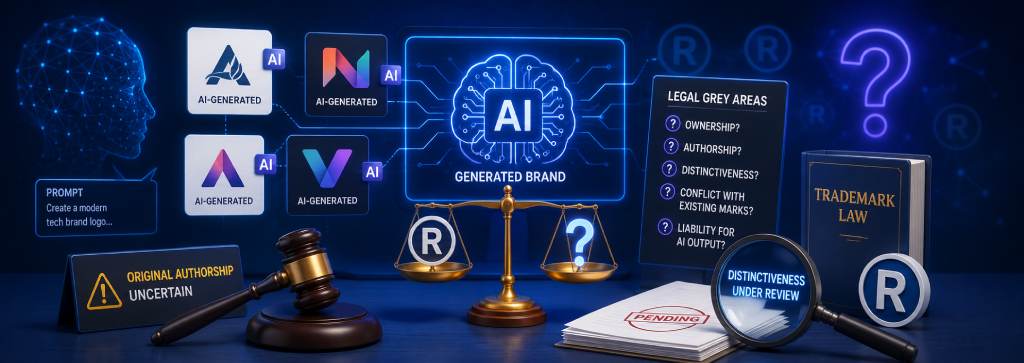
Courts and trademark offices are now beginning to face difficult questions, such as:
- Who owns an AI-generated trademark?
- Can AI-generated content qualify for trademark protection?
- Who is liable if AI-generated branding infringes existing rights?
- How should similarity be assessed when AI systems rely on existing datasets?
- These questions remain largely unresolved in several jurisdictions.
Ownership Issues in AI-Generated Branding
Ownership is one of the biggest legal grey areas in AI-generated branding. Under conventional intellectual property principles, ownership usually belongs to the creator or the business commissioning the work. AI complicates this concept because the branding is generated by software rather than a human designer.
Different AI platforms also operate under different licensing terms. Some grant full commercial rights to users, while others retain limited rights over generated content. Businesses often overlook these terms before adopting AI-generated logos or brand names. This creates a risk where multiple users may receive highly similar outputs from the same AI platform. If two businesses use nearly identical AI-generated branding, trademark disputes become highly likely. Businesses relying on AI branding should therefore review platform licensing agreements carefully before commercial use.
Trademark Infringement Risks Are Increasing
AI systems generate branding by analysing existing content patterns. This increases the possibility of accidental similarity with established trademarks. Trademark infringement does not always require exact copying. Even a confusingly similar logo, name, or slogan may trigger legal action if consumers are likely to associate it with another business. AI-generated branding becomes particularly risky in industries where brand identity plays a major commercial role, such as fashion, technology, cosmetics, food, entertainment, and digital services.
Several legal experts have observed growing concerns regarding AI assisted logo generators and automated naming tools because many outputs share common stylistic elements or linguistic structures. Businesses using AI branding should conduct comprehensive trademark clearance searches before launching products or services. Working with a trademark law firm in India can help companies identify conflicts early and reduce future litigation risks.
Can AI-generated marks be registered?
Trademark registration authorities generally focus on distinctiveness and commercial use rather than the identity of the creator. In theory, AI-generated trademarks may still qualify for protection if they meet legal registration requirements. However, practical challenges remain.
Trademark examiners may reject AI-generated marks if they are too descriptive, generic, or visually similar to existing marks. Since many AI tools produce predictable or trend-based outputs, originality becomes harder to establish. Another issue involves evidence of authorship and first use. Businesses may struggle to demonstrate exclusive ownership if similar AI-generated assets are produced for multiple users.
Some jurisdictions are also considering whether greater disclosure obligations should apply when AI tools are used extensively in brand creation. As AI technology evolves, trademark offices may eventually introduce new examination guidelines specifically addressing AI-assisted branding.
Consumer Confusion and Brand Dilution
Trademark law aims to prevent consumer confusion. AI-generated branding increases the likelihood of overlapping visual identities because AI systems often rely on similar design patterns and datasets. For example, AI logo generators may repeatedly create minimalist symbols, geometric shapes, or modern typography styles resembling existing market leaders. Even if similarities are unintentional, businesses may still face claims of passing off or brand dilution.
Brand dilution occurs when a famous trademark loses its distinctiveness because similar branding enters the market. AI-generated designs may unintentionally weaken well-known brand identities by producing closely related visuals. This issue is becoming increasingly relevant for global brands monitoring online marketplaces and digital platforms.
The Role of Human Oversight in AI Branding
Despite the efficiency of AI tools, human legal review remains essential. Businesses should avoid treating AI-generated branding as legally safe simply because it was machine-created. Legal professionals recommend combining AI-driven creativity with human trademark analysis. This approach helps identify potential conflicts before public launch.
Proper due diligence should include:
- Trademark availability searches
- Domain name verification
- Social media handle checks
- Copyright assessment
Industry-specific legal review
Many companies now work alongside branding consultants and the top intellectual property law firms in India to evaluate the commercial and legal viability of AI-assisted branding strategies.
International Trademark Complications
AI-generated branding also creates cross-border trademark concerns. A logo or brand name generated in one country may already be registered elsewhere. Global e-commerce expansion means businesses frequently operate across multiple jurisdictions from the beginning. AI-generated branding increases the risk of unknowingly infringing foreign trademarks. International trademark protection systems were not originally designed to address automated branding creation at scale. As a result, enforcement standards vary significantly between countries. Businesses using AI-generated trademarks should therefore conduct international trademark searches where expansion plans exist.
Ethical and Regulatory Concerns
Governments and regulatory bodies are now examining broader concerns surrounding AI-generated branding. One important issue involves transparency. Consumers may eventually expect disclosure when branding is created primarily through AI systems. Regulators are also evaluating whether AI platforms should bear greater responsibility for infringing outputs generated by their tools.
Data sourcing practices represent another concern. Many AI systems are trained using publicly available content, including copyrighted materials and registered trademarks. This raises questions about whether AI-generated branding indirectly relies on unauthorised use of protected assets. Future regulations may impose stricter compliance obligations on AI developers, businesses, and marketing agencies using AI-generated branding tools.
The Future of Trademark Law in the AI Era
Trademark law is entering a period of significant transformation. AI-generated branding challenges long-standing assumptions about creativity, ownership, distinctiveness, and infringement. Courts across different jurisdictions will likely play a major role in shaping future legal standards. At the same time, trademark offices may revise examination procedures to address AI-related risks more directly. Businesses adopting AI branding technologies should remain cautious rather than assuming existing legal frameworks provide complete certainty. AI offers enormous commercial potential, but it also increases exposure to trademark disputes, reputational harm, and costly litigation if businesses fail to conduct proper legal review. As artificial intelligence continues to reshape modern branding practices, companies must balance innovation with careful intellectual property protection strategies.
Conclusion
AI-generated branding is transforming how businesses create market identities, but it also introduces complex trademark grey areas. Questions surrounding ownership, originality, infringement, consumer confusion, and legal accountability remain unresolved in many jurisdictions.
While AI tools provide speed and convenience, businesses cannot rely solely on automated systems when building legally secure brands. Human legal oversight, trademark searches, and strategic intellectual property planning remain essential. Companies embracing AI-driven branding should approach it with both creativity and caution. As trademark law evolves alongside artificial intelligence, proactive legal compliance will become increasingly important for businesses seeking long-term brand protection.